One Sibling Group's Orange Moment
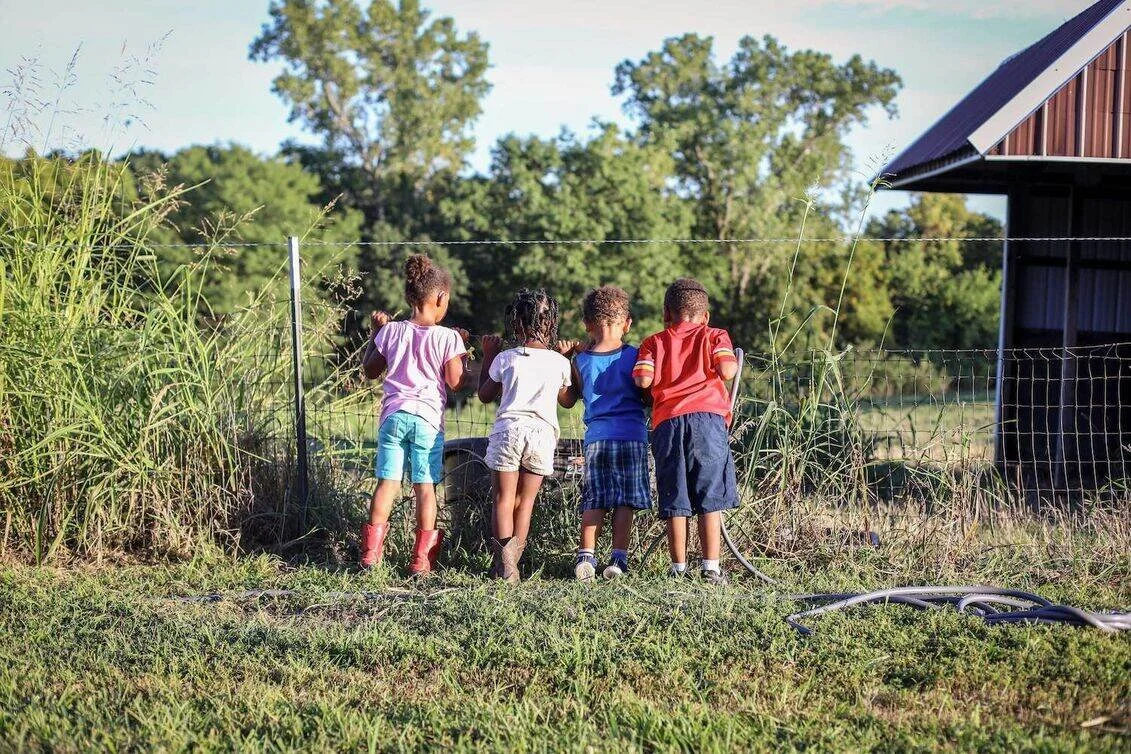
Four siblings, all under the age of five, came into foster care together after years of extreme abuse and neglect.
They screamed, hit, spit, scratched. They avoided sleep. Their behaviors were the protective mechanisms of children who had learned, early and thoroughly, that adults could not be trusted.
A Problem the System Wasn't Built to Solve
There was nowhere for them to go.
Sibling groups of four, with this level of need, rarely stay together. The system doesn't have the infrastructure. Most foster families don't have the capacity. The children are separated, which compounds the trauma.
They were placed with a family residing at Joy Meadows.
What Coordinated Care Actually Looks Like
What followed was not a quick fix. It was a sustained, coordinated effort: one loving home where all four siblings stayed together, play therapy and occupational therapy on-site, animal sessions, Second Saturdays with other kids, healthy food, new clothes, people who showed up every day and said with their actions, not just words, "you are special, you are loved, you are safe."
Case workers, therapists, the school, DCF, and Joy Meadows staff worked together around these children. And slowly, the behaviors that were survival mechanisms began to loosen. Not because the trauma disappeared, but because the circle of support was strong enough to hold the weight of it.
Why Keeping Siblings Together Matters
The research is consistent: keeping siblings together during foster care leads to shorter time in care, better mental health outcomes, higher likelihood of successful permanency, and reduced re-entry into the system.
The cost of not doing it, in human terms and in fiscal terms, is far greater than the cost of doing it well.
But research doesn't capture what it actually looks like. It looks like four children who stayed together. Four children who are learning, for the first time, what safe feels like.
What Your Support Produces
Joy Meadows exists to create the conditions that the system alone cannot. On-site housing that keeps sibling groups intact. Therapy and occupational support available where families already are. A community of volunteers, foster parents, and staff who show up consistently, day after day, until trust takes root.
When you give to Joy Meadows, you are not funding a metric. You are funding the possibility that four children stay together. That the circle of support holds. That healing has enough room to begin.