My Calling Is With My Children
One of the most common questions families ask when considering foster care is, “How will foster care affect my children?” It’s an honest and important question. As a foster parent, I asked it too—and over the years, I’ve seen how fostering has shaped my children in difficult, beautiful, and deeply meaningful ways.
My husband and I have been married 27 years, and even when we were dating we felt God stirring our hearts for adoption for children we didn’t yet know. Seven years later we had three biological children in three short years. I was grateful for our beautiful family, but the burden for foster care hadn’t gone away. With three toddlers, work, and church ministry, I couldn’t imagine adding children from hard places. I worried about time, safety, and how it would impact my kids. I kept telling God He must have the wrong person—hadn’t He seen the family He had given me and how much was required to care for them well? To keep them safe? That burden was now for another decade.
Then one night I was again reading Isaiah 6:8: “Here am I. Send me!” My heart echoed it, even though I didn’t see how it could be possible right then.Then my Bible fell open to Isaiah 8:18 which I read for the first time: “Here am I, along with the children the Lord has given me…” That verse changed everything.
I realized I wasn’t called to foster apart from my family—I was called to foster with my family. God had given me my husband and children as part of the way to accomplish His mission, they were not barriers to it. And He was big enough to hold all of the hard parts that may follow.
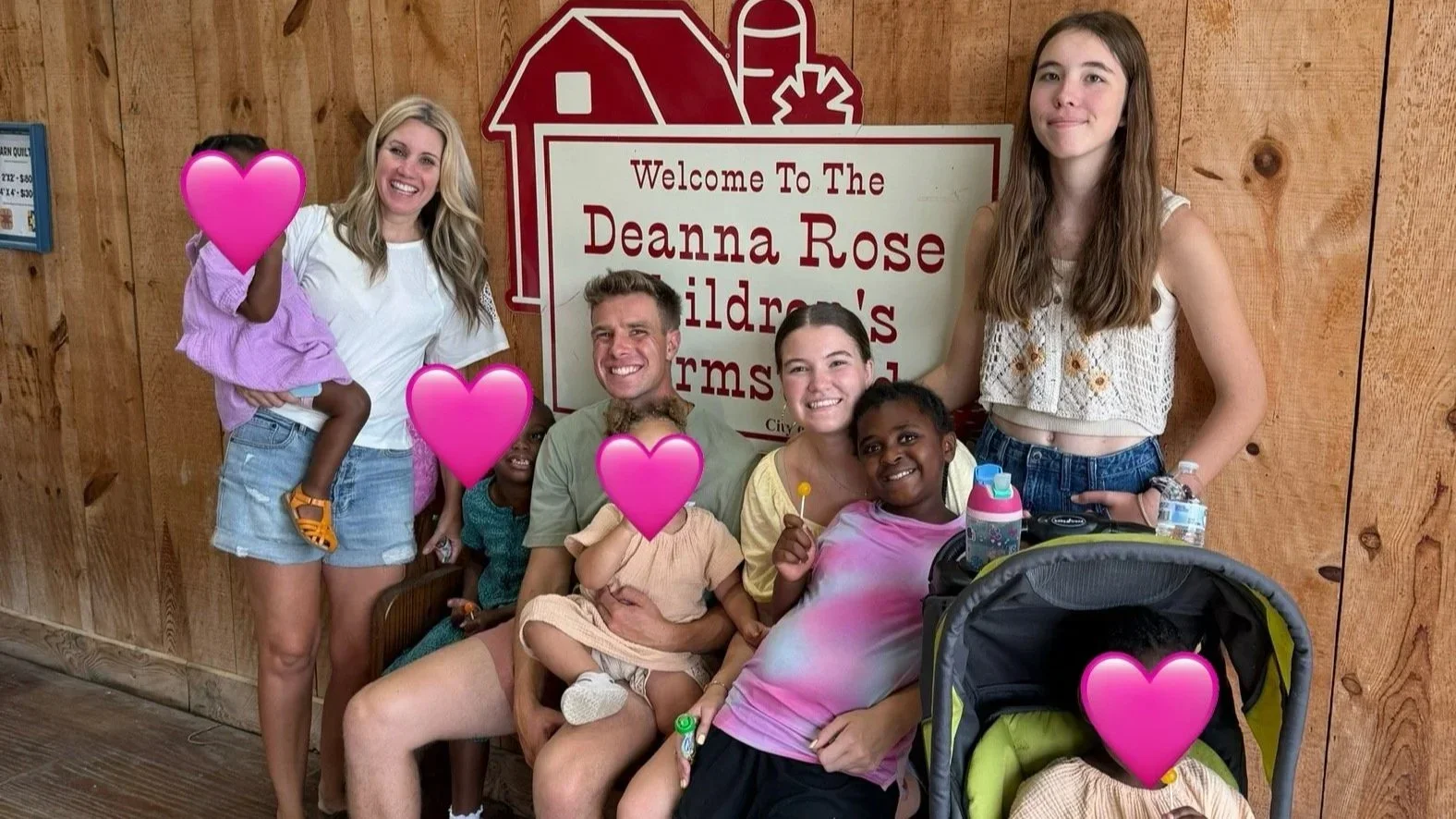
Foster family reflecting on how foster care affects biological children.
Foster Care Shaped My Children in Lasting Ways
Over the last decade of fostering, I’ve watched this truth unfold. Yes, my children have faced difficult realities I wish they hadn’t. But they’ve also learned so many essential truths.
Humility: All that we have is from God and not our own doing.
Empathy: An understanding of what trauma can do to our minds, so that even best efforts to “do better” aren’t always enough.
Advocacy: Be curious about behaviors instead of angered or repulsed by them
Compassion: God created all of us the same, with a need to be loved deeply. Not everyone can accept love, but it is our job to give it out freely.
Joy: Feelings can’t be dictated by our circumstances which are often unfair. Joy comes from God alone.
Faith: Pray for big things and also trust that God can handle the things that do not make sense.
Grief: Grief is part of love. We can’t avoid loving to escape grief.
Humanity: Every person is loved and created by God. Not because of what they do, but because that is who they are.
I have seen my children love and connect with our foster children in ways I never could. Just as Isaiah 8:18 describes, my children have become signs and symbols of a good God. We are doing this work together.
Isaiah 8:17-18 “I will wait for the Lord who has turned away from the descendant so fJacob. I will put my hope in him. I and the children the Lord has given me serve as signs and warnings to Israel.”