A Family Resource Center for Those Impacted by Foster Care
A family resource center for foster care families addresses something the traditional child welfare system cannot: the layered, relational roots of family instability. Child removal into foster care does not stem from one incident, but from layered family instability — housing, mental health, economic, relational, and trauma issues, not a single crisis. Kansas faces an urgent need for additional community-based support, with a removal rate of 3.3 per 1,000 children, above the national rate of 2.2. Last year, 39% of DCF removals were for concerns not meeting abuse or neglect thresholds but reflecting significant instability like caregiver stress, family, behavioral, or environmental crises that require immediate intervention — these are Families in Need of Assessment (FINA).
While the number of children in care is declining, the length of time they remain in foster care has increased for many. In 2025, the average length of stay in foster care in Wyandotte County was 32 months — the highest in the state — indicating that when families do experience removal, they are not receiving comprehensive support to move toward timely permanency.

The Imbalance at the Heart of the System
Over 50% of children in Kansas foster care have a goal to reintegrate with their parents, but there is a significant imbalance of caregiver support: foster parents receive structured support from case management and private organizations, while biological parents often lack comparable relational, therapeutic, and practical assistance. Without equitable support, progress stalls, permanency is delayed, and children remain in care longer. Low post-reintegration support also increases the likelihood of re-entry into foster care.
Access to mental health support remains a persistent challenge, with approximately one-third of children with a mental health need not having that need met, and approximately two-thirds of children experiencing a delay in services.
The statistics and numbers connected to foster care can easily become a blur by their magnitude and complexity. But they provide a picture of a child, a family that we must pay attention to. The numbers describe a family that has experienced difficulty so extreme that there are no other solutions than to remove a child and place them with strangers — to assign a case manager, a judge, a legal system — to work through difficult, personal, and complex family problems. There is no neighbor to call on, no church home to lean on, no aunt or uncle to step in so that a system can be avoided. There is a family that is alone, facing obstacles that have compounded to overwhelm so much so that endangerment of a child is imminent. That is the true brokenness of the system.
The Root Cause: A Poverty of Relationships
The underlying driver of these outcomes is what child psychiatrist Dr. Bruce Perry describes as a "poverty of relationships." Research demonstrates that relational connectedness is the strongest predictor of mental health outcomes and overcoming adversity. Families interacting with the child welfare system lack a "therapeutic web" of supportive relationships and community that buffer stress and build resilience. Without intentional relational support in a community-based setting, parenting education, case management, or service referrals alone are insufficient to create long-term change.
Parents also carry significant generational trauma, yet they are expected to meet complex case plan requirements without access to sustained community connection or healing-centered services. Current responses remain largely short-term and fragmented across agencies. While there is growing emphasis on reducing unnecessary removals, simply keeping a child at home without building relational resilience does not address the root causes of family instability or ensure child safety.
Families throughout the metro are experiencing high rates of non-abuse removals, prolonged foster care placements, increasing needs among older youth, and limited post-reintegration support. There is a need for a community-driven family resource center that provides immediate relief, relational connection, and restorative services across the full continuum for those impacted by foster care — from prevention and stabilization, to support during foster care, to reintegration and long-term family resilience.
The Joy Meadows Family Resource Center
Joy Meadows is a faith-based nonprofit serving as both an anchor and coordinating hub for cross-sector collaboration — linking churches, public agencies, and private partners to create a unified system of support where children and families impacted by foster care can heal and thrive. Since 2017, Joy Meadows has grown into an expanding support network providing therapy, housing support, clothing, camps, peer gatherings, animal and nature-based programming, and church-based wraparound care. In 2025 alone, over 7,000 direct interactions of support took place on the Linwood Campus.
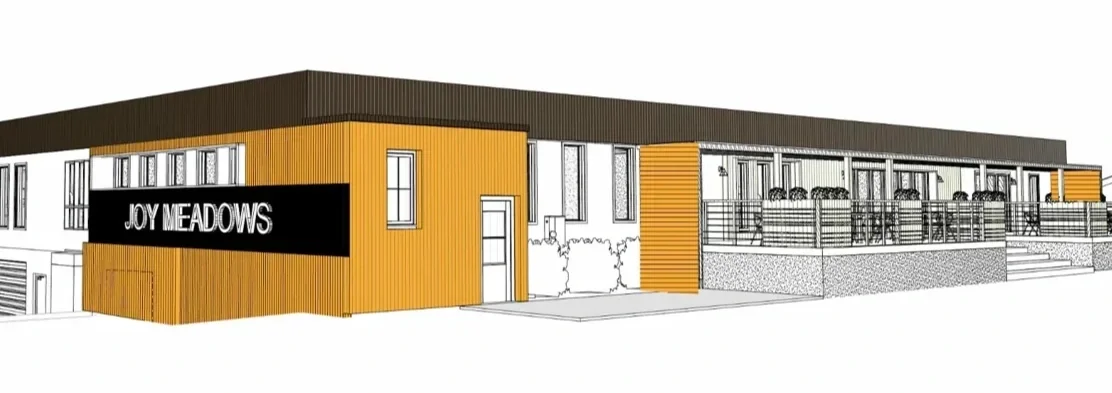
In 2026, Joy Meadows will expand by launching its second campus — an 80-acre site in Kansas City, Kansas (Wyandotte County) — with a Family Resource Center designed to help families access needed support through relationships, quickly and effectively, through a collaborative approach that integrates public, private, and faith-based partnerships.
National Recognition for the FRC Model
Family Resource Centers have now been formally recognized by both the House and Senate Appropriations Committees as providing direct assistance to families through parenting support and education, navigation of care and social services, mental health counseling, activities, and other supports unique to each organization and location. Preliminary data shows significant promise: a 63% reduction in child abuse cases and a $4.93 return for every tax dollar invested, according to current research.
Who the Family Resource Center at KCK Serves
The Joy Meadows Family Resource Center will support the full caregiving ecosystem surrounding children impacted by foster care, including:
Foster parents
Biological parents working toward reunification
Children currently in foster care
Kinship caregivers
Families navigating reintegration and long-term stability after reunification
Youth transitioning out of foster care (as capacity grows)
Families receiving prevention services (as capacity grows)
Supporting Caregivers Improves Child Outcomes
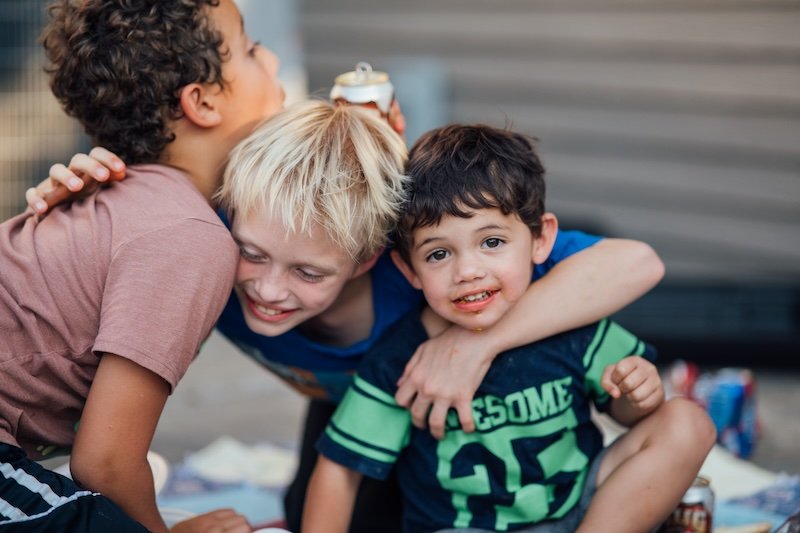
Joy Meadows is grounded in a simple truth: when caregivers are supported well, children experience better outcomes.
For foster caregivers, strong support leads to greater placement stability, improved continuity of mental health care, stronger educational outcomes, and healthier responses to trauma behaviors. Supporting kinship caregivers means that children can stay connected to important social, family, and community connections, while alleviating the financial and logistical burdens families on this path carry.
For biological parents, meaningful support during foster care and through reunification improves permanency outcomes and strengthens long-term family stability. Early support can reduce time in care, support trauma healing, improve access to counseling and treatment, remove practical barriers to reunification (such as beds, clothing, food, and basic household needs), strengthen parent-child connection, and reduce the likelihood of children re-entering foster care.
There is not one agency, program, nonprofit, or church that can meet all the needs represented in our foster care system. But by working together, long-term, relational, community support is possible. Building on the success of the Linwood Campus, the new KCK campus provides the space, location, and capacity needed to expand Joy Meadows' impact through a Family Resource Center model — serving as a central hub for coordinated, community-driven support throughout Wyandotte County and beyond.
Core Services at the Joy Meadows KCK Family Resource Center
1. Basic Needs & Stabilization
Clothing Closet
Concrete support through case referral with partner organizations (housing, employment, education)
2. Clinical & Therapeutic Support
Therapy center with trauma-informed partnering providers for co-treatment
Individual and group therapy for adults and children
Trauma education and support services for parents
3. Family Support & Community Connection
Parent skills training through cooking, nature, and wellness
Mentors and educational advocates
Community events for foster parents, kinship families, and biological parents
Joy Meadows Church Network training and Care Community support
4. Child & Youth Enrichment
Trauma-informed extracurricular activities for children
Nature-based activities including animals and horticulture
Equine therapy and therapeutic activities
5. Collective Impact Partnerships
Shared office and partnership space for agencies and nonprofits to coordinate care
Needs referral network to support family stability
Local inter-faith church network for wraparound support
Outcomes and Community Impact
Across the nation, Family Resource Centers are proving effective at strengthening protective factors such as parental resilience, social connection, and healthy caregiver-child attachment. They are also associated with reduced child abuse and fewer — and shorter — out-of-home foster care placements. Joy Meadows' Family Resource Center will contribute to these outcomes locally by improving caregiver stability, reducing isolation, increasing access to therapeutic supports, meeting urgent basic needs, and strengthening long-term family resilience.
Ultimately, Joy Meadows envisions a future where communities work together across sectors — state agencies, churches, and private nonprofits — to replace the foster care system as the default response with holistic, restorative community support. The Joy Meadows Family Resource Center model advances this vision by providing a community-driven framework that strengthens families, supports reunification, and helps children experience safety, healing, and stability, both during foster care and beyond. We are looking forward to this future expansion and growth within this model.
¹ Annie E. Casey Foundation. (n.d.). Children ages birth to 17 in foster care, United States - rate per 1,000 children. KIDS COUNT Data Center 2025. datacenter.aecf.org/data/tables/6242-children-ages-birth-to-17-in-fostercare
² Kansas Department for Children and Families. (n.d.) Child Protective Service Reports, Children Placed In Out of Home Placement by Primary Reason for Removal SFY2025. https://www.dcf.ks.gov/services/PPS/Documents/FY2025%20DataReports/FCAD_Summary/RemovalsByPrimaryReasonFY2025.pdf
³ Kansas Department for Children and Families. (n.d.) Foster care demographic reports, Out-of-Home Placement Types and Length of Stay (SFY25). www.dcf.ks.gov/services/PPS/Pages/FosterCareDemographicReports.aspx
⁴ Kansas Department for Children and Families. (n.d.) Foster care demographic reports, Permanency Goal for Children In Out of Home Placement. https://www.dcf.ks.gov/services/PPS/Documents/FY2026%20DataReports/FCAD_Summary/PlacementPermGoalFY26.pdf
⁵ 2024 audit by Center for the Study of Social Policy (CSSP), State of Kansas and its contractors' 2024 compliance regarding services for youth in the foster system. https://cssp.org/resource/mcintyre-v-howard-progress-of-kansas-department-of-children-and-families-2024/
⁶ Perry, Bruce D., Winfrey, Oprah. (2021). What Happened to You? Conversations on Trauma, Resilience, and Healing. Flatiron Books. And Hambrick, Erin & Brawner, Thomas & Perry, Bruce. (2018). Examining Developmental Adversity and Connectedness in Child Welfare-Involved Children. Children Australia. 43. 105-115. 10.1017/cha.2018.21
⁷ Casey Family Programs. What Do We Know About Family Resource Centers? Sept. 2024 edition. https://www.casey.org/media/24.07-QFF-SCom-Family-Resource-Centers.pdf