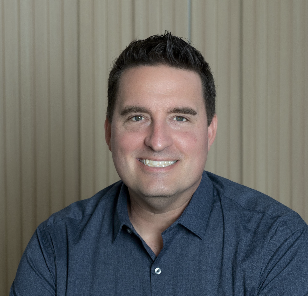
One Biological Mom's Orange Moment
Breonna lost her children to the foster care system more than once.
She was an addict, cycling in and out, losing her kids, getting them back, and losing them again. Rehab wasn't working. AA wasn't working. She kept relapsing, running into walls, over and over.
What she didn't have through most of that time was community. Not the kind that holds you accountable and holds you up at the same time. Not the kind that loves you through your past and still believes change is possible.
What Changed Everything
When Breonna's children were placed in foster care, they were placed with foster parents living at the Joy Meadows Linwood Campus. Those foster parents showed compassion even when Breonna wasn't ready to receive it.
At the same time, a church wrapped around Breonna and her husband. While the foster parents cared for their children, that church community walked alongside Breonna and her husband as they pursued sobriety, employment, stability, and healing.
A case that had been headed toward termination of parental rights, multiple times, ended instead in reunification. A family restored. A generational story beginning to change.
"The only way reintegration happens is, yes, the kids have to be healed, but at the same time, mom and dad need support as well. Which is often the place where that ball is dropped." — Breonna
Why Biological Families Are Part of the Circle
Breonna got her children back. And she says clearly: the grace of foster parents and a church that cared about her, not just about her children, made the difference.
That kind of support changes outcomes. Research on family reunification consistently points to the same finding: children fare better when biological parents receive wraparound support alongside their children. Sobriety, stable housing, employment, community. These aren't separate from a child's healing. They're inseparable from it.
And yet, right now, that kind of support is not available to every parent walking through the foster care system.
Joy Meadows and the Full Circle of Foster Care
Joy Meadows was built on the belief that supporting the whole family, foster parents, children, and biological parents, is the only way to create lasting change for children impacted by foster care.
That means foster parents living on campus who can extend grace in the hard moments. It means a Church Network of 77+ local congregations equipped to walk alongside families at every stage. It means therapy, community, resources, and belonging for everyone in the circle.
Breonna's story is proof of what becomes possible when no one is left outside of it.
You Can Be Part of Someone's Story
Every family that walks through the foster care system deserves what Breonna found: a community that refuses to give up on them.
Joy Meadows is working to expand that support to more families across the region. When you give, volunteer, or partner with Joy Meadows, you become part of stories like Breonna's.