How Churches Can Support Foster Families Beyond the First Few Weeks

When a family welcomes children into foster care, their church has an opportunity to provide the kind of consistent support that makes a lasting difference. But how can churches support foster families beyond the initial excitement and encouragement? Sometimes, the most meaningful help begins with simple acts of service and relationships that endure.
___________
For ten years, Stacey and Rick have been part of the life of their church. They arrive early, remember your kids’ names, and stay afterward to stack chairs. Stacey has participated in Bible studies, helped with VBS, prepared meals for grieving families, and served at the annual holiday outreach. Rick has served alongside her. The people at New Life have become friends they worship with, celebrate with, and count on.
So when Stacey learned that three siblings at the school where she teaches needed a safe place to land, she and Rick opened their home. The children were eight, eleven, and fourteen. Their church friends were proud of them. “If anyone can do this, Stacey and Rick can,” people said. Every Sunday, the family still comes through the doors of New Life. To most people, it looks as though they have found their rhythm.
But getting there takes everything they have. One child is anxious about going into Sunday school. Another struggles when plans change. Rick is watching the clock because they need to get home before an afternoon visit. During the week, they juggle therapy, school meetings, court dates, and calls they cannot put off. Dinner gets pushed later and later. Stacey slips out of Bible study early three weeks in a row, then stops going. She misses her friends, but she doesn’t have the energy to explain her absence.
Their foster care agency and a local ministry have connected them with people who understand this season. That support matters. Still, those relationships are new. At New Life, Stacey and Rick have a decade of shared life with people who know them as the ones who help. When a friend tells Stacey how wonderful it is that they took in the children, she hears genuine encouragement. She also finds herself saying, “We’re doing well.” It’s hard to follow everyone’s confidence in them with, “Actually, could you bring us dinner?” She worries that admitting how hard this is might sound like regret.

Why Foster Families Need More Than Encouragement
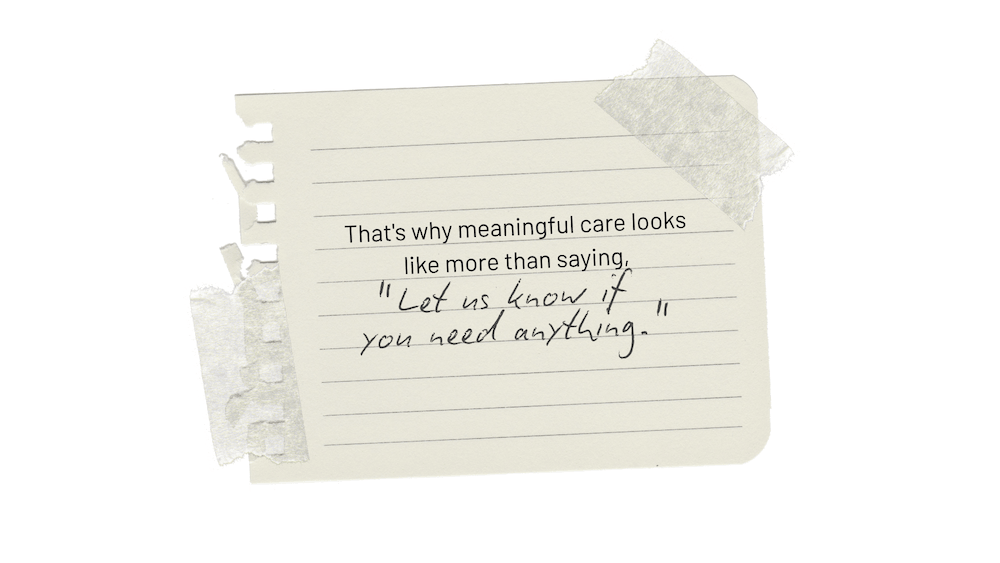
We often say that church is family. But being family means showing up for the hard, ordinary parts of life, too. For Stacey and Rick, “Let us know if you need anything” places one more task on an already full plate. A specific offer of dinner on Tuesday is easier to receive. So is a friend who notices Stacey’s absence from Bible study, checks in without asking her to explain, and keeps inviting her back.
5 Practical Ways Churches Can Support Foster Families
Supporting a foster family doesn't always require a new program or a large budget. It begins with people willing to offer consistent, practical care.
Provide meals regularly. Organize a rotating meal schedule that continues beyond the first few weeks of a placement.
Offer practical help. Ask about specific needs like transportation, laundry, yard work, errands, or household tasks.
Stay connected. Keep inviting foster parents into friendships, small groups, and church activities, even when they cannot consistently participate.
Support the entire family. Find appropriate ways to encourage foster parents and help children feel welcomed and included.
Build a long-term support team. Create a Care Community that shares responsibilities and commits to walking alongside the family through changing seasons.
How Churches Can Provide Lasting Foster Family Support
And that care needs to last. Families can receive a rush of help when children first arrive, only to find themselves alone a few months later. A promise of help that doesn’t come through can make a difficult week even harder. What Stacey and Rick need is a church that can say, through consistent action, “We see you. We’re with you. We’re part of caring for these children.”
Build a Foster Care Ministry That Shows Up and Stays
At Joy Meadows, we’ve seen how meaningful it can be when a church is equipped to make that commitment. It can begin with a care community: a small group of people who commit to walking alongside a family for a year, sharing practical tasks and building relationships that last beyond the first few weeks.
Stacey and Rick opened their home to three children who needed a safe place. Like every foster family, they couldn’t do it alone—they needed a team committed to walking alongside them for the long haul.
Most churches and friends want to help; they simply don’t know where to start.
Joy Meadows provides that path. Our Care Community model equips 8–12 households to wrap around a family with weekly meals, prayer, and practical support for a full year, creating the longevity foster care demands. This simple, structured commitment turns overwhelming seasons into sustainable foster homes.
Joy Meadows provides:
Monthly Network Gatherings: Encouragement, education, and connection for leaders.
Leader & Volunteer Training: Step-by-step guidance to launch and sustain Care Communities.
Ongoing Coaching: One-on-one support from our Advocate Coach through every season.
Your Church Can Help Foster Families Thrive
Foster families need a community that will continue showing up with practical help, meaningful relationships, and consistent care. Through the Joy Meadows Church Network, churches receive training, resources, and ongoing support to build Care Communities that walk alongside foster families.